Two thirds of European teenagers do not feel "stressed, sad, or socially excluded" because of social media?
Eurobarometer stats challenge political alarmism over teen social media use: 2/3 don't feel stressed, sad, or excluded; 55% don't compare themselves to others; and 75% haven't encountered problematic content like hate speech online.
Yesterday, the European Commission published news on the third - and final - meeting of a special expert panel on child safety online, also signaling that the final conclusions and recommendations to the President of the European Commission Ursula von der Leyen will be presented on July 13, 2026.
Conveniently, the new Eurobarometer data was published “on the occasion of the final panel”, which, according to the Commission’s press release, “confirms the significant impact of excessive screentime and social media on the mental and physical health of young people”. The Eurobarometer data shows that, on average, young people in Europe spend 4.5 hours online during a school day and 6.1 hours on weekends.
Surprisingly, the survey results quoted in the same press release do not match the highly alarmist narratives popular not only among European, but all politicians worldwide.
As an example, the press release says that 1 in 3 adolescents report “feeling stressed, sad or socially excluded because of social media” - in other words, two-thirds likely don’t.
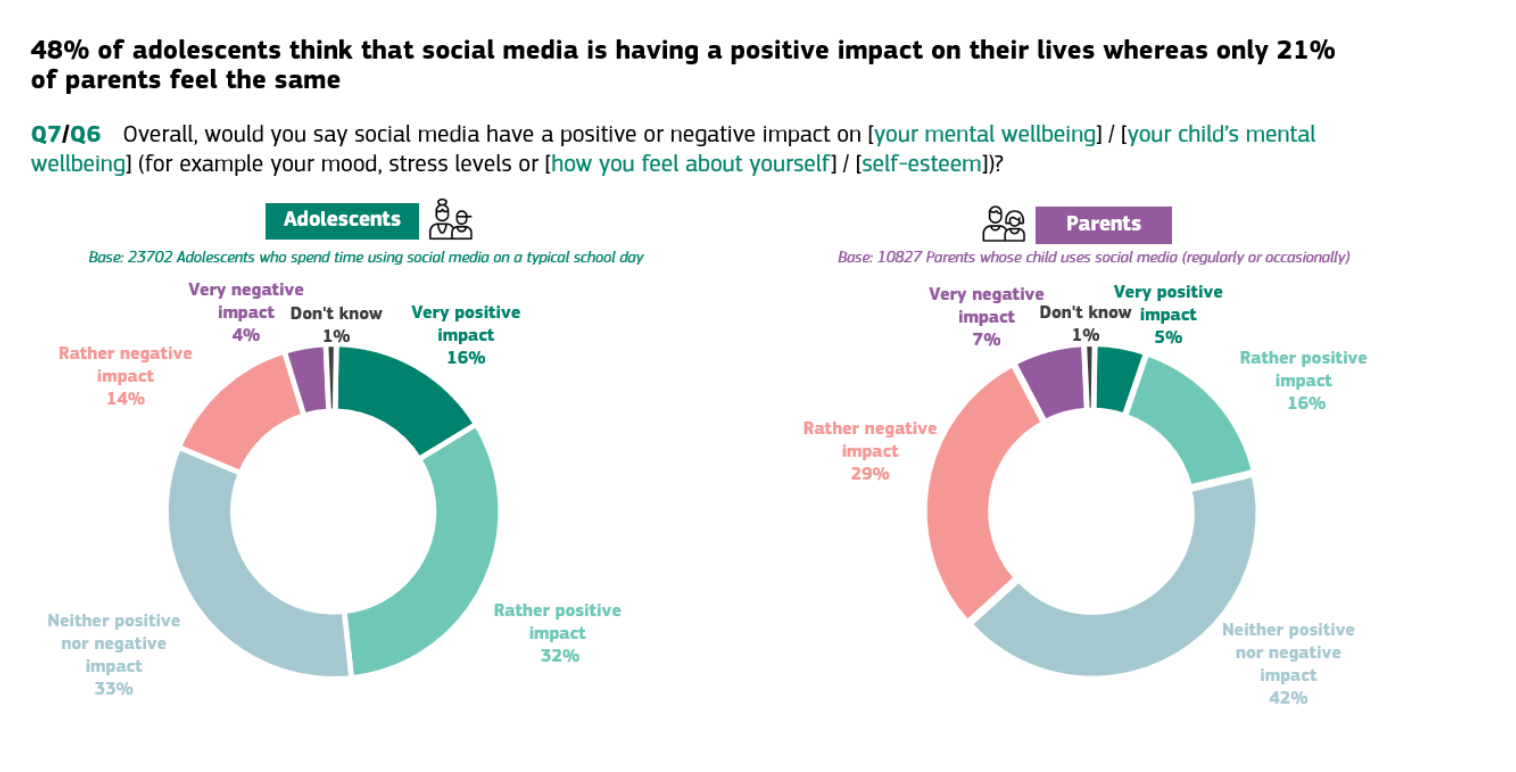
Surely, opinions about social media's impact on teenagers' lives differ between adolescents and parents; however, the majority of both teenagers and parents are either neutral or positive. For example, 16% of teenagers think social media has a very positive impact, 32% think it has a rather positive impact, and 33% are neutral. Among parents, 5% view the impact as very positive, 16% as rather positive, and 42% as neutral.
Furthermore, 45% “acknowledge that they tend to compare themselves to others when using social media” - that sounds even more modest than adolescent behavior offline, where comparison to others is a normal way of a teenager’s life.
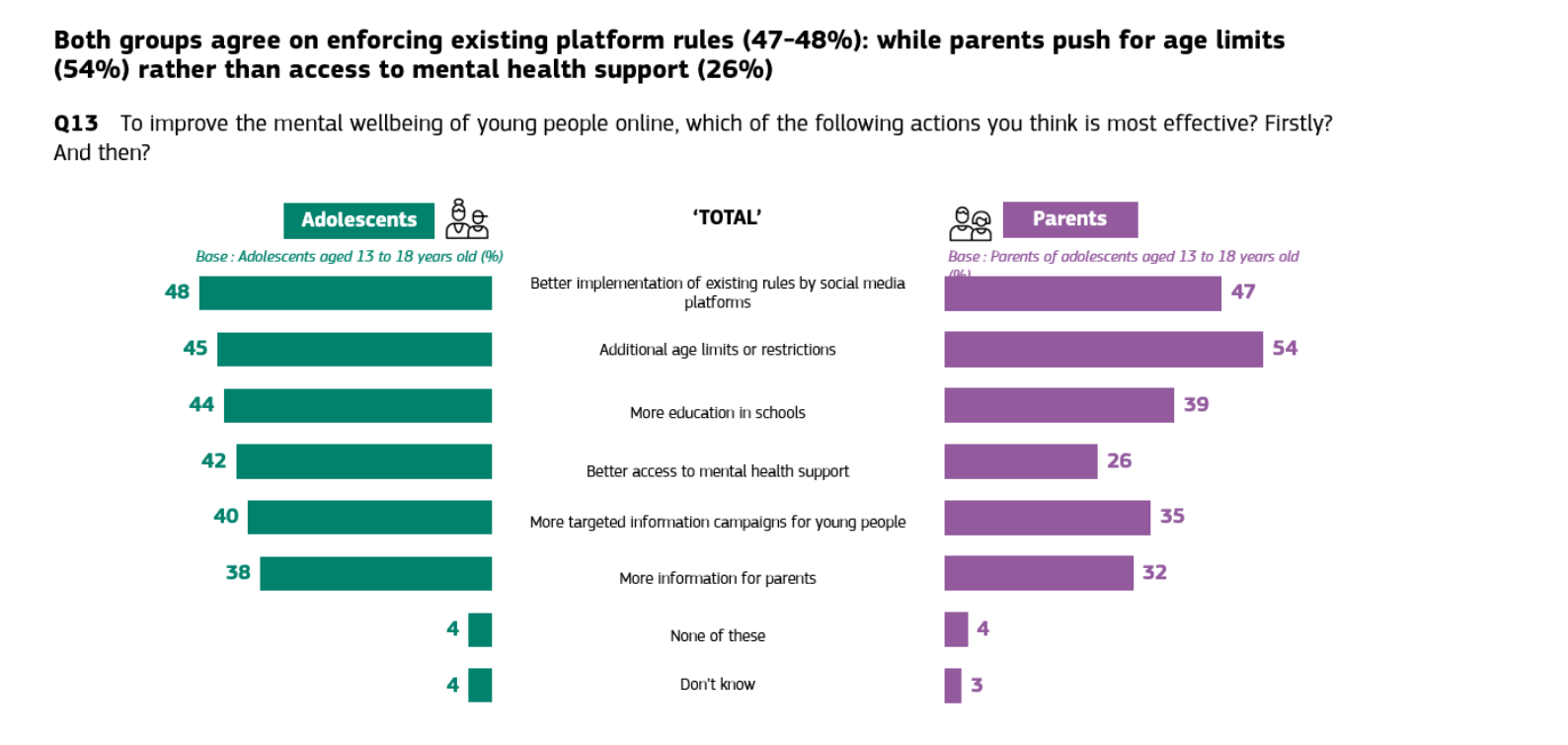
The survey also asked both adolescents and parents about the regulatory approach they would support: 48% of teenagers and 47% of parents believed the EU should focus on enforcing existing rules. However, parents were more supportive of introducing new age limits - 54% were in favor.
Lastly, the press release states that around a quarter of adolescents have come across problematic content online, including hate speech - in other words, 75% haven’t?
Balancing freedom of expression and political whims
As the special panel co-chairs, Dr. Maria Melchior and Prof. Dr. Jörg M. Fegert, will present a report containing their recommendations on July 13, it will be extremely interesting to see whether the panel has fairly assessed ideas drawn up by the Council of Europe, which has essentially stated that whatever is legal offline should be legal online for teenagers. Moreover, it stated that freedom of expression is as important as the protection of minors.
Getting a green light from the expert panel is very important for the Commission, which needs evidence to trigger an EU-wide political mandate for a minimum age for social media use. The other necessary elements are already present: we wrote previously about the EC’s pilot age-verification app, which has received a fair share of criticism. The EU Commission also had to navigate criticism relating to virtual private networks (VPNs) - a tool that has been used extensively in countries such as Australia or the UK to bypass social media bans. Commission’s own press release lists a number of different strategies, statements, and legislations that can be used to enforce the social media ban, if it’s supported by the political majority in the EU: