Price tag of the EU’s Cloud and AI Development Act
The new ECIPE study, commissioned by CCIA Europe, suggests that the transition costs of the EU’s Cloud and AI Development Act are, on average, six times larger than the EU Commission estimates.

Following proposed updates to the EU Cybersecurity Act that would force the replacement of Chinese equipment from high-risk vendors like Huawei and ZTE, European telecom executives pushed back, warning that full replacement costs of up to €40 billion would divert critical funding away from 5G and 6G investment and stating that they would expect the EU to chip in to compensate for these costs.
Meanwhile, discussions surrounding the transition costs of the EU’s Cloud and AI Development Act have remained far quieter until now, largely because the Commission’s own projections were relatively modest, at €18 billion in estimated additional costs.
The ECIPE study shows that CADA’s proposals would add between €36 billion (narrow scenario) and €233 billion (broad scenario) in costs across both the public and private sectors. According to CCIA Europe, a moderate scenario risks imposing €115 billion in added costs over the next decade - six times the Commission’s upper estimate of €18 billion - disproportionately affecting highly digitized Member States.
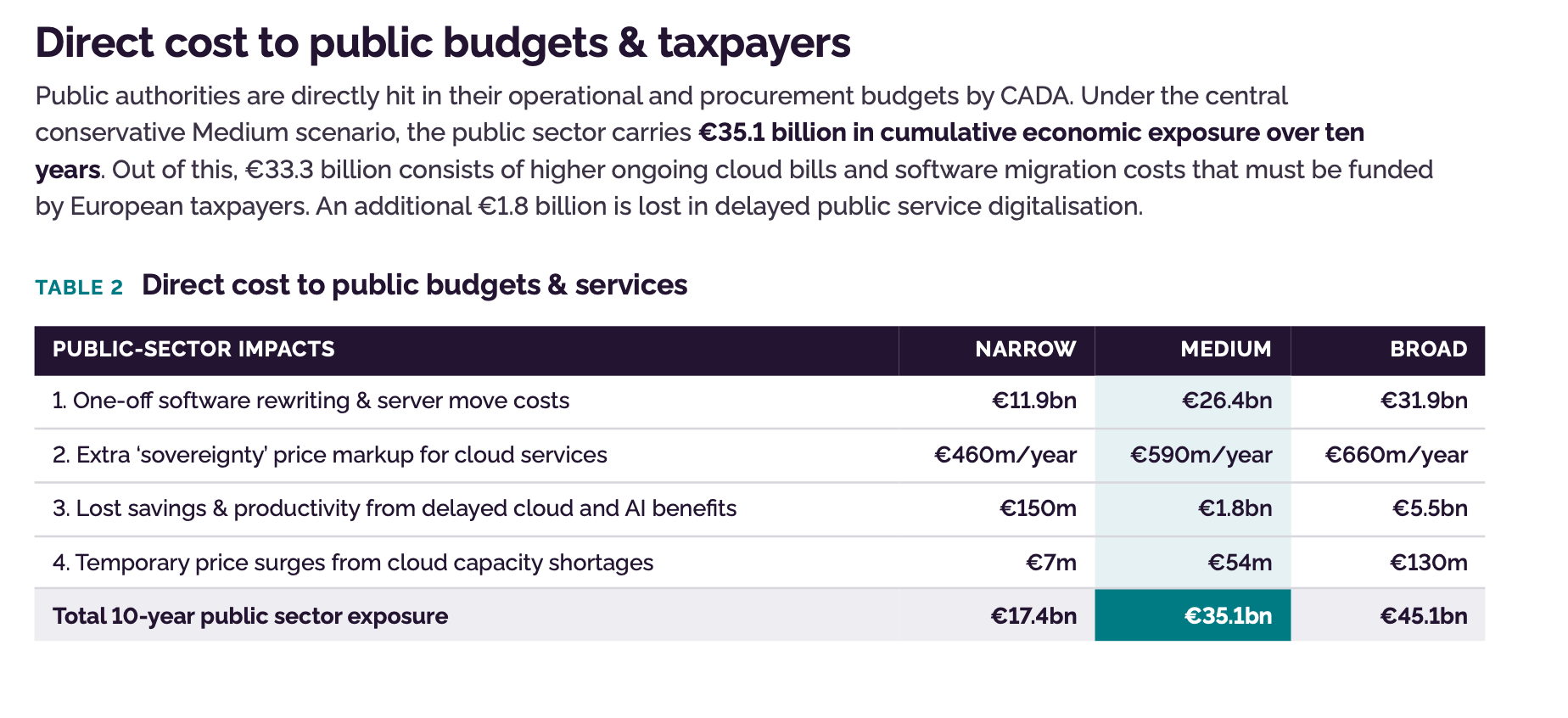
Extra costs for the public sector: €35.1 billion
The ECIPE study estimates that the transition costs over 10 years under CADA’s medium scenario would result in €35.1 billion in additional expenditure, whereas the European Commission estimates costs ranging from €4 to €18 billion.
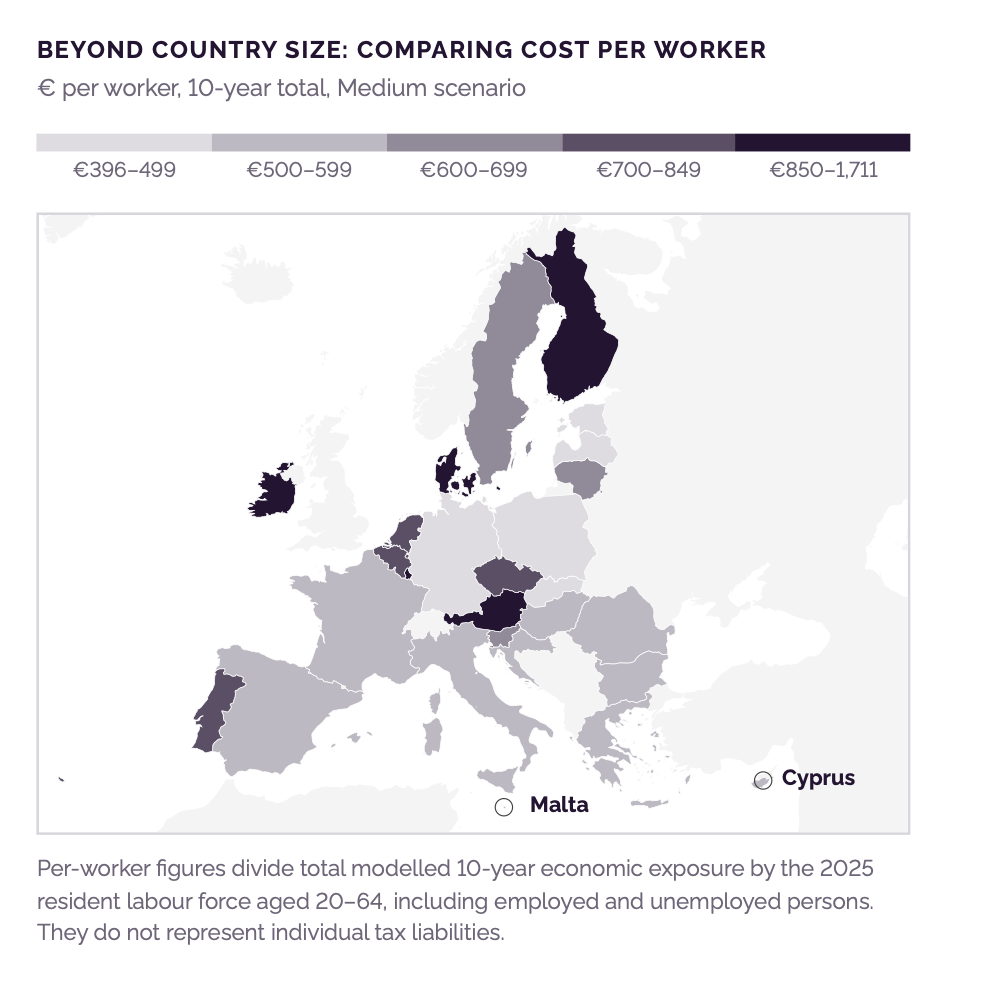
On average, countries like Luxembourg, Denmark, Austria, Finland, Ireland, and the Netherlands would face the highest transition costs, ranging from €1,711 in extra costs per worker in Luxembourg to €856 in Finland. The study notes that countries without pre-existing exclusionary regimes for cloud and AI providers will suffer the most, whereas larger economies that have historically focused on spending taxpayer money on national providers will suffer the least.
Spillover into the private sector and €80 billion in extra costs
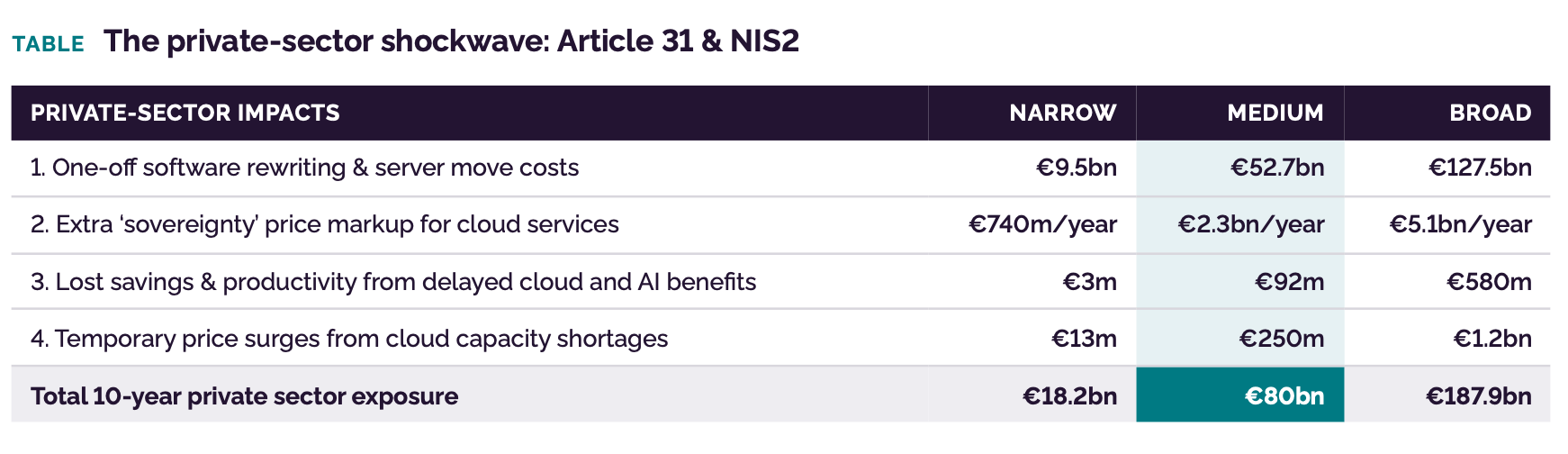
While CADA is largely treated as a public procurement framework for European member states, the proposal’s Article 31 allows regulators to extend CADA’s rules to private entities that are essential in NIS2 sectors, such as energy, banking, transport, and healthcare. Furthermore, the study notes that CADA’s Recital 66 acknowledges that standards set out for the public sector can be extended to the private sector over time.
The study estimates that a Medium scenario - where 25% of the potential essential private-sector base is affected - would create €80 billion in added costs for the private sector. Alternatively, the Narrow scenario would cover 10% of these businesses and result in €18.2 billion in extra costs, while the Broad scenario would cover 50% of these businesses and result in €187.9 billion in extra costs.