Connectivity Featured GPS jamming: how is Europe responding? Radio signals hijacked, pilots losing navigation, ships drifting off course - for many European nations, these scenarios are no longer far-fetched but pressing realities. Last year, Lithuania noticed a staggering 60% jump in GPS interference, which set off alarm bells across the continent.
Data Featured European data troubles—and why the upcoming EU Data Union strategy matters As European data-based companies eagerly await a consultation on the EU Data Union Strategy (which is promised to be launched in 2025 Q1), it is crucial to highlight the structural issues for data sharing within Europe.
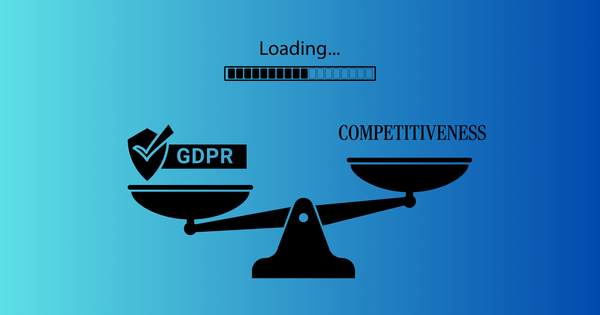
Data Featured EU announces plans to include GDPR in simplification efforts: what do European startups actually need? Yesterday, EU Commissioner Michael McGrath announced that the upcoming Omnibus Simplification Initiative will also include the GDPR. While the core issues with the GDPR are unlikely to be addressed, the EU should consider expanding the discussion to better support European innovators.
News Featured EU to lower ESG reporting metrics to boost competitiveness and reduce compliance costs The European Commission aims to lower its ESG reporting requirements, recognizing the compliance costs it may imposed on firms and consumers.
Connectivity Featured Bridging the EU’s digital divide: how smarter satellite policy can close the gap The tech to close Europe’s digital divide exists—but bureaucracy and protectionism keep millions offline. The EU must cut red tape, enable competition, and adopt hybrid solutions—fiber where possible, satellites where needed. Affordable, accessible internet isn’t a luxury—it’s a necessity.
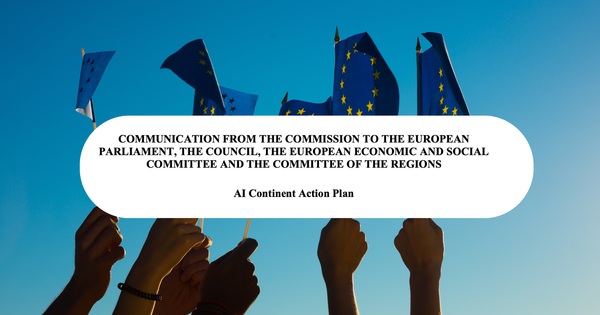
AI Featured European AI whirlwind week: Paris AI summit, Le Chat, AI Liability, and GPAI Code of Conduct European AI Whirlwind Week: Paris AI Summit focused on business, JD Vance criticized Europe’s AI stance, EU pledged €200B, while the U.S. and UK refused to sign an AI declaration. Mistral AI launched Le Chat, the AI Liability Directive was dropped, and the GPAI Code sparked regulatory concerns.
News Featured EU's e-commerce toolbox, digital fairness & the case of personalized ads The EU Commission unveiled the E-Commerce Toolbox, proposing Customs Union reform, removal of duty exemptions (<€150), stricter customs controls, and stronger consumer protections. By 2026, the Digital Fairness Act may offer restricting personalized ads, impacting both consumers and SMEs.
News Featured Cutting red tape: no time for incrementalism. Suggestions for EU policy makers. With the release of the Competitiveness Compass this week, the European Commission has once again committed to cutting red tape. The ambition is commendable, but for real impact, the EU needs to avoid usual siloed, incremental actions and draw from best practices from across Europe.
Featured Global Gateway: The EU’s development strategy needs a revamp "Global Gateway" is the EU’s €300 billion initiative to boost "smart, clean, and secure" links in digital, energy, and transport sectors worldwide, supporting emerging economies. Program's success depends on adopting new ideas, methods, and cutting bureaucracy to compete with global powers.
AI Featured The future of AI regulation in the US: will Musk change his approach? Elon Musk's position on AI regulation aligns more closely with the EU than with the general MAGA narrative. Time will tell whether this stance was principled and continues or whether it was aimed at certain industry players with whom Musk has had disagreements.
E-governance Featured The EU Commission should respect Member States’ opinions on Europe’s digital infrastructure needs In December, EU ministers at the TTE Council largely opposed easing telecom mergers, extending telecom rules to digital services, and introducing new IP rules, citing risks to net neutrality and consumers. Will the Commission respect their opinion?
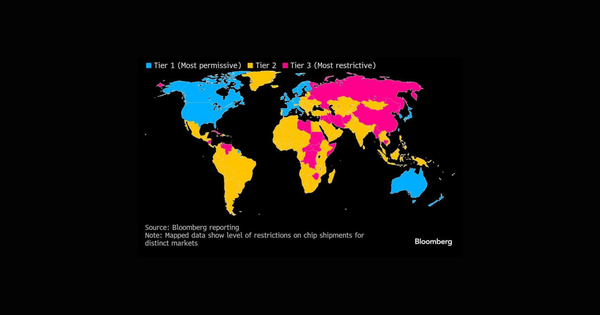
Global Featured Chips: how do Biden’s chip export controls affect Europe? Tech policy circles on both sides of the Atlantic have been abuzz this week regarding outgoing President Biden’s AI diffusion or AI chip export control measures which essentially divide the EU into two tiers.
E-governance Featured Top EU tech regulatory initiatives to watch in 2025 and beyond Four heavyweight initiatives - the Digital Networks Act, the Digital Fairness Act, updates to Public Procurement Directives, and the much-debated Chat Control - have the potential to radically reshape Europe’s tech landscape, affecting businesses, consumers, and public administrations alike.
E-governance Featured E-GOV OWL: How did Central and Eastern European governments perform in their digital transformation efforts this year? Welcome to the second edition of E-GOV OWL: Central and Eastern Europe. This edition explores digital transformation initiatives and key legislative and institutional developments in CEE governments from June to December 2024.
News Featured A request for Dombrovskis et al.: the EU's regulatory simplification efforts need to be... simplified and digitalized The EU is prioritizing reducing administrative burden on SMEs, led by Ursula von der Leyen and Valdis Dombrovskis. To succeed, the approach must become more streamlined, transparent, and inclusive, avoiding scattered efforts and ensuring broader public representation than before.
E-governance Featured Hungarian response to the role of Western social media: digital sovereignty or digital censorship? The Hungarians criticize foreign interference in Romanian elections via social media, likening Western platforms to CCP propaganda. This may result in stricter media controls ahead of its 2026 elections.
Connectivity Featured What happened at the TTE-Council? Cyber, conclusions on the EU's digital infrastructure needs, Polish priorities The TTE Council approved conclusions on the EU's digital infrastructure needs but expressed caution about merger rules, fair competition, and dispute resolution changes, stressing that decisions must be evidence-based and carefully analyzed.
Innovation Featured Europe's grandfather economy in one graphic Whether through mergers and acquisitions, reinvention, or long-lasting family dynasties, the Old Continent continues to cling to firms that have lived longer lives than most European countries.
News Featured EU Tech Loop wrap-up: November 2024 In this month’s EU Tech Loop wrap-up we dive into the EU's digital future: the EU Commission’s tech agenda, Digital Networks Act, Ukraine’s e-gov lessons, AI sandbox progress, BRICS digital sovereignty, EU red tape cuts, and EU-US tech ties.
Innovation Featured Meet the next College of EU Commissioners: what’s the agenda for tech? We analyzed Ursula von der Leyen's mission letters to Commissioners, highlighting key agenda points for European tech over five years, focusing on their impact on competitiveness, consumers, innovation, and public administrations in EU Member States.
Innovation Featured New survey reveals: CEE startups want more urgent action from national regulators Today, the Consumer Choice Center Europe (CCCE) released survey results examining how EU data strategy regulations impact operations and innovation potential among startups in Central and Eastern Europe (CEE).
Global Featured Cutting red tape in the EU requires sharp(er) scissors The incoming European Union's College of Commissioners has a number of difficult tasks ahead of them, one of which is effectively and tangibly cutting red tape.
Innovation Featured Europe can't achieve AI prosperity on the data of others If European data is not available to train AI models, then it stands to reason that any European AI experience will be crummy, inaccurate, or reflect poor public data.
Innovation Featured Europe’s AI regulatory sandboxes need improvement After introducing the AI Act, regulatory sandboxes have become an EU’s poster child measure aimed at both helping European innovators with compliance questions, as well as provide a safe space to test and innovate, in accordance with rules and procedures.
Global Featured BRICS in the global tech wall: will the US and EU hit the snooze button again? The BRICS coalition (currently including Brazil, Russia, India, China, South Africa, Iran, Egypt, Ethiopia, and the United Arab Emirates) has been increasingly vocalizing its position on its own tech sovereignty.