
What can the EU do to improve lawmaking?
The Consumer Choice Center Europe's new report “Wiser regulation” evaluates the Commission's EU rulebook communication, identifies structural flaws in legislative processes, and offers tech-forward, actionable recommendations for EU institutions and member states.

In late April, the Commission presented a Communication “A Simpler, Clearer and Better Enforced EU Rulebook” - a concise document on how to improve the quality of the EU’s lawmaking, enhance transparency, enhance stakeholder involvement, deep clean the EU's law, and manage potential gold plating or even avoid transposing the EU rules on a Member State level.
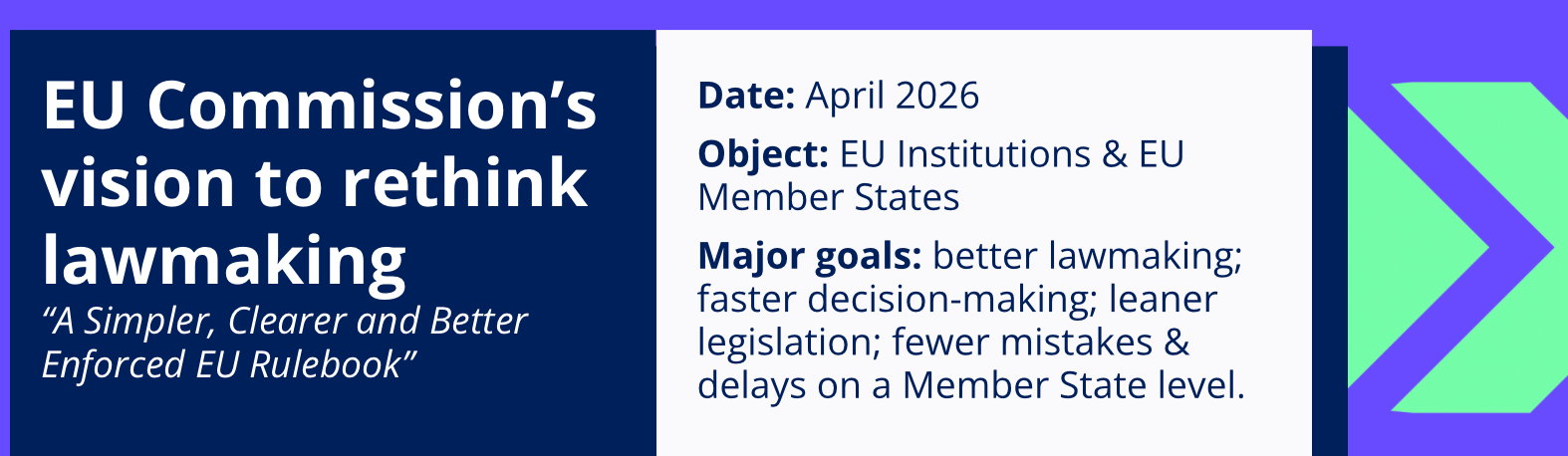
While the document captures some of the necessary changes to the EU’s lawmaking, the list of actions could be more ambitious and future-oriented. Especially now, when the Commission is undergoing broad internal discussions on efficiency, institutional AI-readiness, and more.
Consumer Choice Center Europe's latest paper, "Wiser regulation - How the EU and individual Member States must transform lawmaking to keep the European economy competitive," evaluates the very same Communication, identifies structural flaws in current legislative and consultative processes, and offers actionable, tech-forward recommendations for both EU institutions and Member State governments.
The positives: tech solutions
A welcome change - the Commission committed to transparently record and report any procedural derogations in the explanatory memoranda. Hopefully, that means both lawmakers and citizens will be informed about how often and why procedural derogations occur (such as failing to follow all the steps in the Better Regulation Guidelines).
The document also promises to notify stakeholders directly when consultation summaries are published on the "Have Your Say" portal - a seemingly simple thing, but it hasn't been practiced so far.
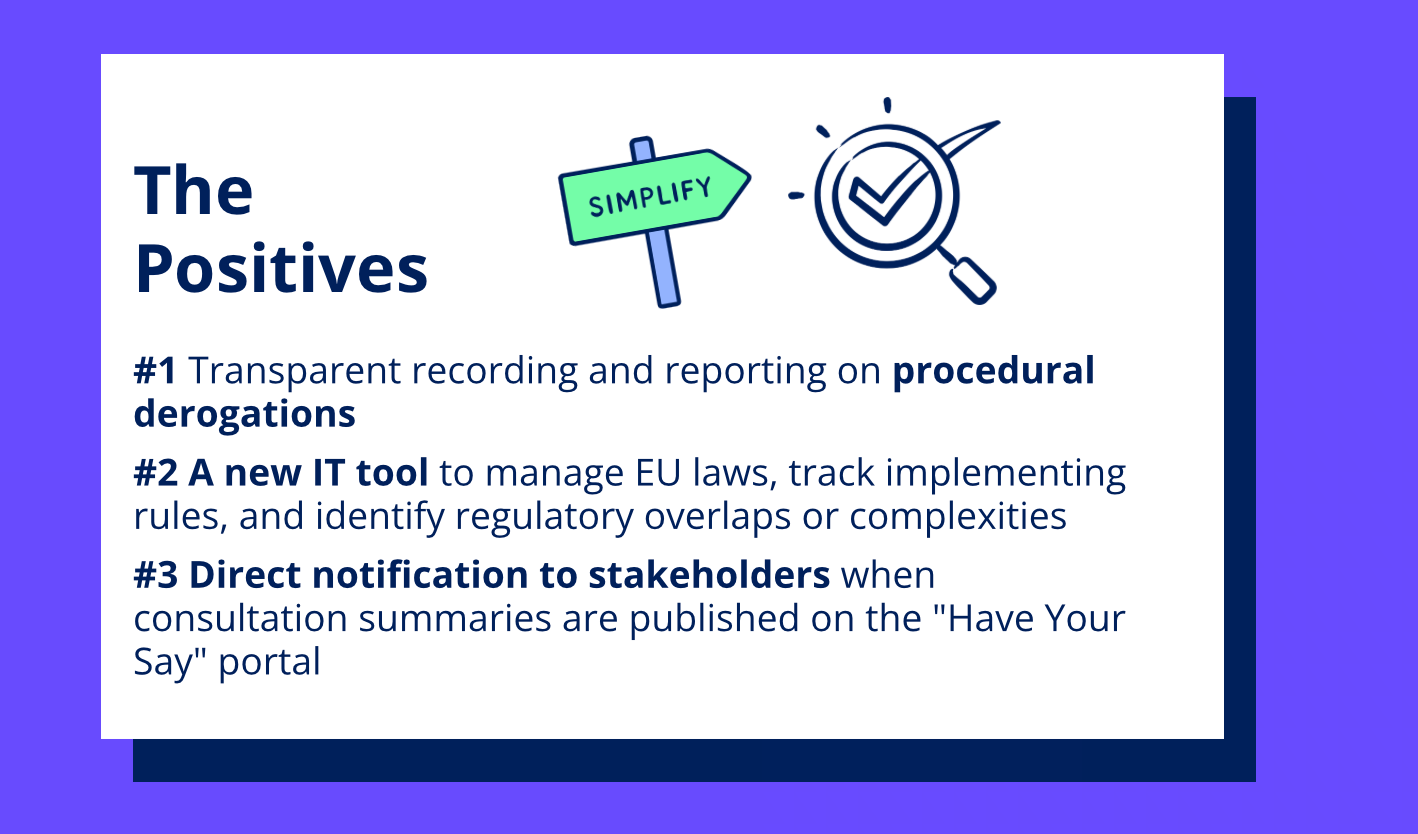
Lastly, the Commission proposes to leverage technological progress and promises to introduce a new IT tool to manage EU laws, track implementing rules, and identify regulatory overlaps and complexities. This objective must be elevated to one of the primary goals, as it can help address many deep-rooted problems stemming from the complexity of the EU’s institutional framework and divergent interests.
Issues that remain unaddressed
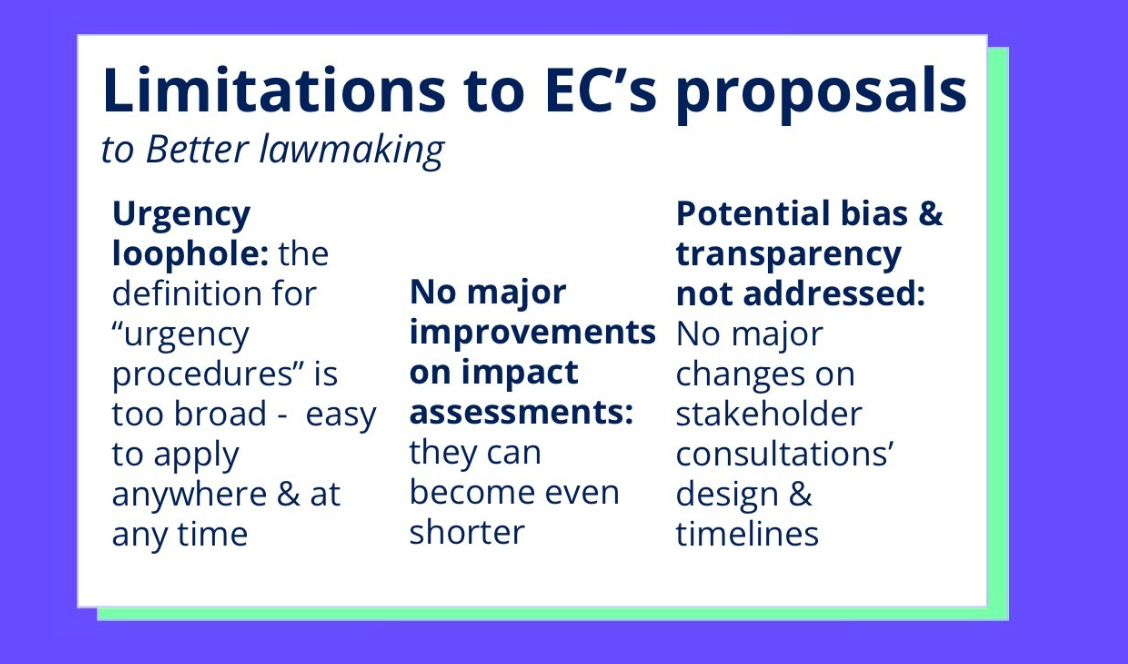
The Commission’s previous Call for Evidence on better regulation drew broad criticism for its stakeholder engagement procedures. Various stakeholders requested more neutral public consultation designs, realistic timelines for participation, among other things. Nevertheless, the follow-up document did not address the design of public consultations and vaguely promised to avoid counting in holiday periods "whenever possible," while retaining the right to reduce the standard 12-week window to just six weeks.
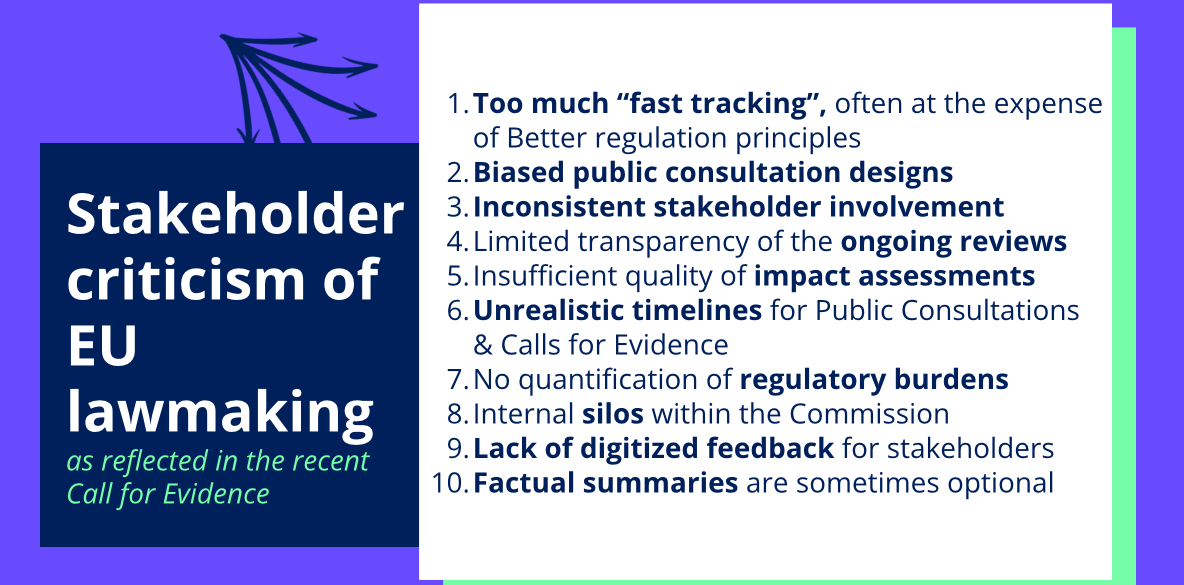
The Commission's self-evaluation of its own work and more concrete suggestions for improvement are limited. Historical evidence of non-adherence to the Better Regulation Principles demonstrates that it is not enough to simply define principles; one must also closely monitor and enforce their application across institutions and, effectively, change institutional culture.
The very subject that was challenged in the Ombudsman - the urgency procedure - remains very broad. The EC's definition includes four triggers: 1) crises or shocks, 2) severe consequences of inaction, 3) legal deadlines, and 4) a "political context creating a need for urgent action". While the first two are legitimate, the latter two are broad enough to justify almost any procedural shortcut and should be viewed with caution and, eventually, reviewed.
Recommendations to the Commission and the EU Member States
Consumer Choice Center Europe's report outlines actionable recommendations to the European Commission. The recommendations focus on improving lawmaking, enhancing institutional capabilities, and leveraging technology to ensure the EU rules are simple(r) and understandable. Lastly, they focus on facilitating accountability and ensuring that everyone in the Brussels bubble is on board, or at least more on board than they are now.
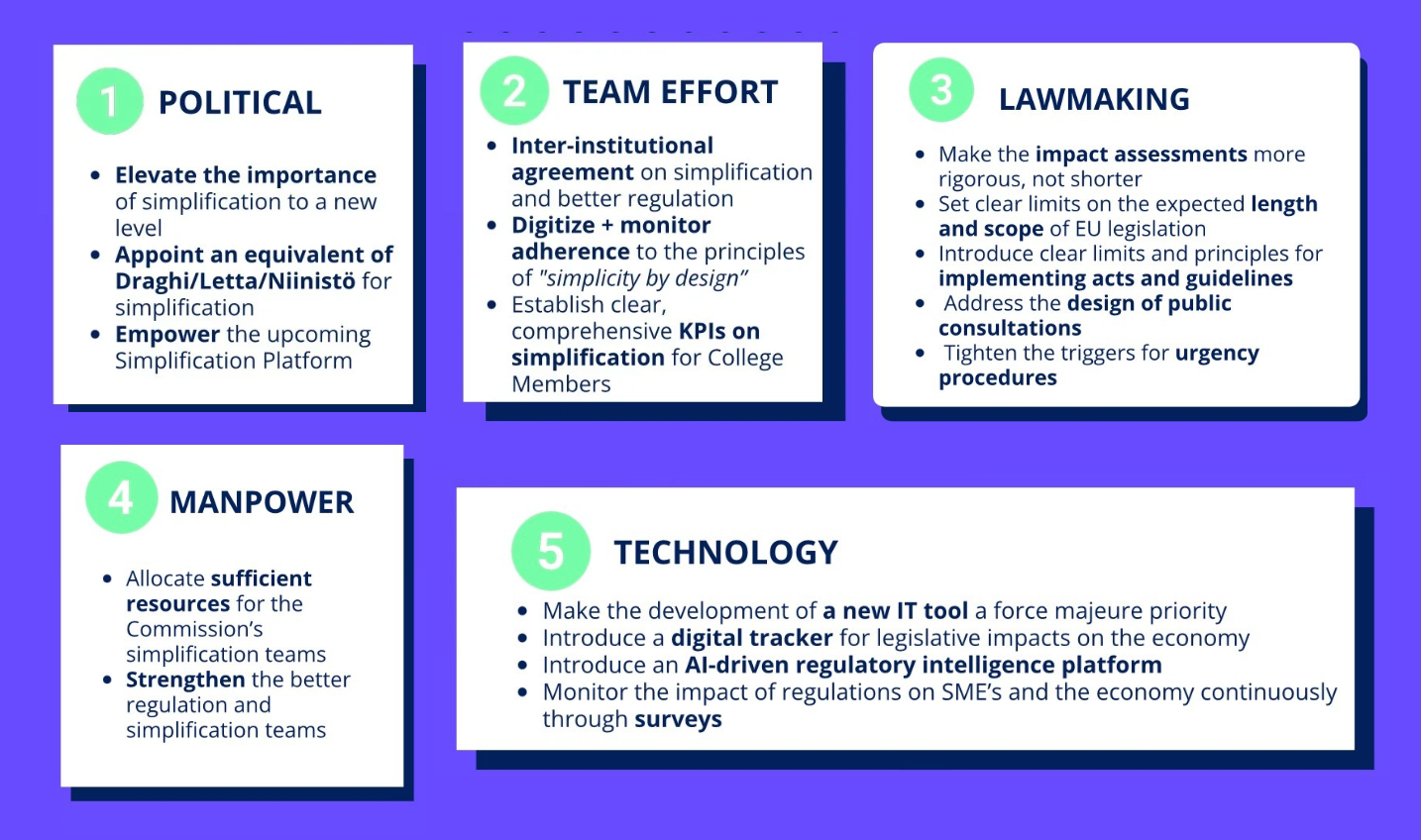
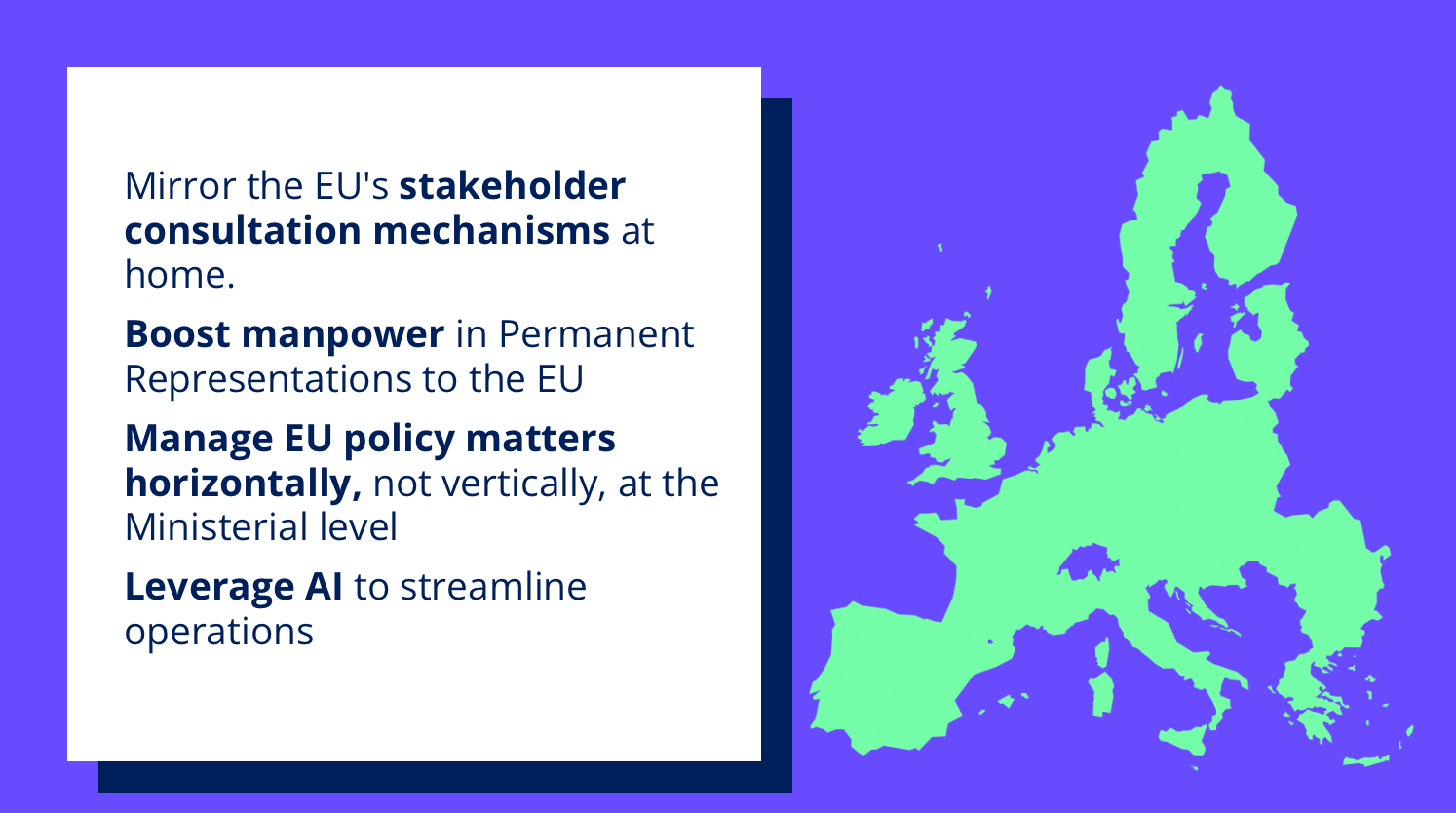
The report also outlines recommendations for individual EU Member States, which are increasingly unable to keep up with the EU's legislative pace, resulting in limited participation in EU policymaking. While the EC is reportedly considering sending extra manpower to capitals, the capitals themselves are often understaffed, unable to react, let alone proactively propose their own agenda points.
Why do we need this?
Mario Draghi recently said that the EU must evolve into a pragmatic federation to sustain its global competitiveness. Such integration, however, will face resistance unless Member States and external stakeholders feel genuinely integrated into the process and have strong trust in the EU’s institutions and lawmaking, while European businesses choose to operate within and for Europe rather than despite it.
Improving the European lawmaking process is essential to achieving the latter and should be taken seriously by all members of European society, regardless of their political leanings. Failure to adapt and improve, not only speed, but also quality-wise, will inevitably exacerbate further internal tensions, fuel political populism, and strengthen anti-EU sentiment.
- Download the report here
- Download the infographic here
- For press inquiries, email us at info@ccceurope.org or editor@eutechloop.com


