
Bart de Witte on open source, the AI race, EU simplification & EU Inc.
With Bart de Witte, a leading European voice in healthcare innovation and open source, founder of Hippo AI foundation and Isaree.
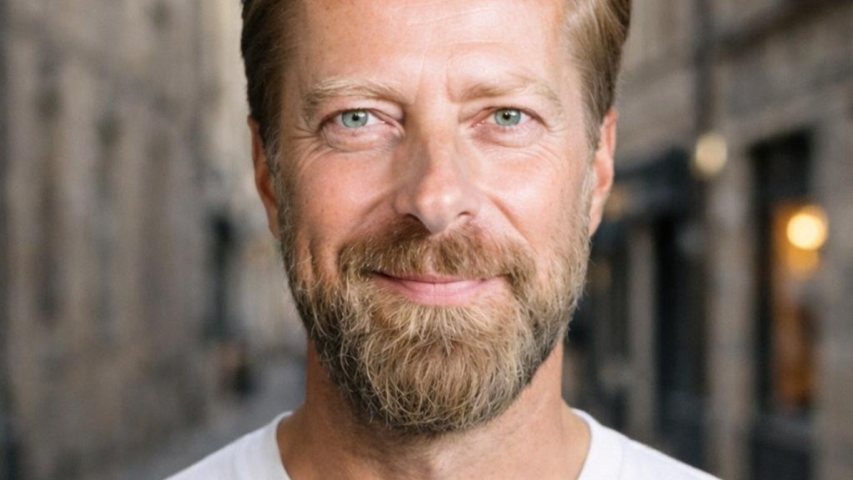
For our very first episode of EU TECH LOOP Radio we sat down with Bart de Witte - a leading European voice in healthcare innovation, open source, founder of Hippo AI foundation, and Isaree startup to discuss open source vs. open weights debate in the United States, Europe’s simplification efforts with the AI and Digital Omnibus, and notaries winning over European founders with the EU. inc.
Hi Bart. Thank you for joining us today. I really wanted to talk to you for a long time now. You're an actual practitioner, you've built startups, worked in corporations, and advised international bodies like the WHO. You saw the birth of European technology, data, and consumer regulations, at least part of it, and you also saw the frameworks that followed them. What else should we know about you, and what are you currently building?
Thank you for having me, and I found it extremely important to have these conversations. I don't think we have enough of the conversations, so always happy to share my insights. I think that you might want to know for me is that is that in 2018 I actually left a well-paid job at a large corporate in order to start something that by then was looked at as a ridiculous idea. But if you now ask Google Gemini who was globally first in pushing open source AI in medicine, it spits out my name. So I'm quite proud of that achievement
And you're also working on something else currently, am I right?
Yes. So I started back then in 2018 a non-profit, Hippo AI Foundation, after Hippocrates, which initially was like a mixture between Doctors Without Borders and the Linux Foundation. That was originally the idea, but then I started spending most of my time in lobbying structures in Brussels and in Washington because there was too much pushback against open source. But then open source happened thanks to the great contribution of many larger companies, mostly US in the beginning.
And then I started two years ago Isaree. And with Israee we have built an agent orchestrator that runs on the doctor's own device, offline-capable, connected to a builder platform where clinicians create and share agents for healthcare workflows. And we kind of want to replicate the Android Play Store or iOS App Store for medical agents with an ecosystem.
Do you think we have enough health AI startups in Europe currently? We have lots of companies in the US, in Israel, in Hong Kong, etcetera, in the EU, it's a little bit more limited. Am I right or completely wrong?
There are quite a lot of startups doing something, but I find that it is quite difficult in Europe. If you have a completely new idea, it's really hard to set it up. In Europe, being an entrepreneur seems to be very risk-averse, and people are kind of waiting for the regulation to form the market, and then when the regulation is there, then they start building based on that regulation.
And I think when you want to be really innovative, you don't wait until somebody gives you a framework. You start building, and then you shape, and then you start regulating, but not the other way around. And I find this in Israel to be different. I find this in the US to be different.
What are your thoughts on the recent shift toward open-weight models in the US, where so many companies, including big tech companies, have started advocating for it?
Yeah, and I think it started in February 2023 when Meta published the first LLaMA model, which, back then, was a research model. The reason why Meta did it back then was different than today. So when Meta published its first LLaMA model, the reason was—and it's a very well-known strategy, the same strategy for why IBM in the late nineties was pushing the Linux Foundation—it's called commodifying your complement. And what do I mean by that? As a business model, you have a core, which is where your value driver is, and everything else—your complement—is what is necessary to drive your core. For example, if you are TUI, the German travel operator, you sell hotel rooms, but you have charter flights, which are very cheap flights to fill up the hotel rooms.
In that same way, you can think about IBM with the Linux Foundation. When Microsoft decided to build its own hardware, the partnership between IBM and Microsoft disrupted. And IBM could not sell any hardware because it didn't have the Microsoft software anymore, so it started pushing for open-source software. And in that same way, Meta did the same thing. Meta said it needed to moderate content—it was spending over two billion on content moderation—and it knew that large language models would help reduce the cost. And then you have two options: you can use an API from one of the big AI companies—back then, it was just one company—and become completely dependent on that single company, or you start building open source. And that's what they did. They published LLaMA as one of the first open-source large language models.
And then the whole ecosystem—it was an open-weight model—started to play. It was amazing what we saw, because eight weeks later there was a Bulgarian engineer who turned that large language model into something that you could run on your CPU or consumer-grade hardware. It was called llama.cpp. And what happens in these ecosystems when you give people access—without gatekeeping, without registration, without having to put a credit card number in there—access to valuable assets is that innovation accelerates.
We saw this with the Human Genome Project, which was at the end of the nineties and was an open-source project. We have seen it in many open projects, and in 2023, the whole open-weight innovation system accelerated.
But then Meta stopped because of internal changes, and then the Anthropic and OpenAI world wanted to push for closed source. And then everybody, like, they tried to regulatory capture the market by lobbying against open source.
But then the Chinese companies came, like Alibaba came with its Qwen models. Many Chinese companies started to publish very powerful open weights, and in the end, economics won. That's why last summer, most of the larger companies in the US started to push back against the lobby that wanted to try to ban open weights or open source. They realized that if they run a large language model that is equivalent to what the big AI labs offered six months ago, it's good enough. And the costs for them were about one-fifth of what normally these big labs would ask for. So there are a lot of advantages for these companies to be independent on the economic side.
And then the second part is that we recently had two cases that are very relevant to know. There was a case where researchers at OpenAI mentioned that they solved a Millennium Prize Problem in mathematics—the Navier–Stokes problem. But then there was a researcher from New York University, a mathematician, who later claimed that he had been using OpenAI's Codeex for one year, putting in his data, and he suspected that his data was then used to claim that they solved the problem. The statement that OpenAI made later was that they cannot guarantee that de-identified information was notused for improving their model. That's the first case. So trust, next to economics, is becoming increasingly important.
The second case was where another big AI company claimed to have created a new enzyme based on CRISPR technology using a CRISPR-like enzyme system, where also a researcher from Copenhagen, Denmark, said that he had shared unpublished findings with the models from Anthropic. And he also suspected that his research data—his unpublished findings—had been used, but Anthropic claimed that that work was theirs.
Now, anybody who knows IP law knows that in case of a court ruling, it would be impossible to really find out if that was truly the case or not. Because if you have trade secrets protecting your developments, the trade secrets will survive a court ruling. We need more of these cases, because the more cases we get, the more it becomes visible that you should not, in the state where we are now, trust these sorts of systems with sensitive data that is differentiating you from the ones that you are working against or are in competition with.
For the sake of our readers who are not too familiar with the subject, what's the difference between open source and open weights? Some people are using the terms interchangeably, but it's not the same thing.
I was part of the group defining what open-source AI is. Normally, open source comes from software. It has the word 'source' in there, so it means the source code is open—that's where it comes from.
But in AI, you don't have only source code; you have weights and the training data. So you have a layered artifact where data, source code, and weights are separate from each other.
Now we have GDPR laws, and we could not claim in healthcare to do anything open source, because in healthcare you cannot share the training data due to GDPR regulations. And that's why we said, well, open source should not be mandatory to open all three layers of artifacts, because you cannot open the data layer, because there's a lot of privacy issues involved.
So we said, we need an alternative to a pure open-source definition. And then the open-weight definition came out, where the model doesn't publish the training data, but the source code and the weight file—which is a matrix of numbers—are published and shared, under official open-source licenses, so they can be used by others.
You always have to check the license. The term 'open weights' means sharing the weight file, and being 'fully open source' means that you have access to the training data, the source code, and the weights file.
The EU does have its own open source strategy and some type of tactical plan, what do you think about the strategy and the direction the EU is moving towards with open source? Do we have a potential here?
Europe says the right sentences in a lot of cases, but then always narrows them down. So I think it was in June when the Commission put out an open-source strategy and published it under a tech sovereignty package, meaning that they wanted to create European alternatives—especially for the public sector—to run alternatives to the hyperscalers, like Microsoft Office and all these things.
And let's be clear: this open-source strategy is not about AI. It's about the software stack, the cloud stack, and everything else.
The open-source stack that they are publishing is an initiative where they want to publish an alternative to the open-source hyperscaler infrastructures, like what Amazon Cloud and all the other cloud providers are doing. And in Germany—I don't know if this is the case in Lithuania—a lot of local governments are starting to replace their hyperscaler platforms with local open-source alternatives. In France, the same thing is happening. And the reason for that is the sovereignty that is related to it.
I do support these sorts of initiatives. But having worked in the open-source space for nearly a decade, and living and breathing these principles, what I've learned is that open source mostly comes bottom-up. Open source is created by communities. Open source is not governed by a government or a regulator. Open source is about people working together, solving problems together, and the community governing what they are building.
Now, what I feel is happening here in Europe is that regulators want to push open source, but at the same time, they want to regulate what you can do with open-source. And that will never work, because this is not how open-source communities work. Yes, you need maintainers; yes, you need funding. But what you don't need is somebody telling you what you can and cannot do. Because this is not an application—this is about code. This is about the artifacts that you need to start building your applications.
European Commission's President Ursula van der Leyen recently addressed the European Parliament stating that the second part of the AI race will focus on AI applications to the physical world. What could be the checklist that the EU, national, municipal governments have to complete to avoid repeating the scenario of the first leg of the AI race?
Yes, so the second leg is real, because she talked about the first leg and then the second leg. But in her speech, she treats it as a layer that Europe wins by default. It's like, that's where we're going to achieve, that's where we're going to win. And this sort of rhetoric is how we actually lost the first leg.
And then she said in that speech as well that Europe doesn't need to build the next frontier technology to take the greatest value from it. That's the second leg. So we don't have to build our own models; we should take the APIs of these big companies and start building applications.
The value sits actually on the factory floor, the ward, the field, or the grid in driving in and out of defense. So we should not repeat the mistakes of the past, because I disagree that we should not own the first leg.
Everybody who heard the Mario Draghi report on European competitiveness heard that one problem Europe has had is productivity gains per capita relative to GDP, and that in the last 10 years, the US and Europe kind of went different ways. And we could not log the productivity gains of digitalization on our own books.
Now, if we don't own these models, we are going to make that same mistake again, because the value can then be shifted again to the API holders. So we must name the layer that we need to own. What is the thing that, for each sector, we need to own? Which hardware, which weights? Is it open, is it not? We need to define that.
And there is no plan in that sense for what we need to own. Telling people that we're going to build applications is one thing, but that's easy. So one thing that we are challenged with in Europe—and especially me in healthcare—is that we need to make European data trainable.
And making data trainable doesn't mean that we make it trainable only for European companies. Don't bring geopolitics into it—let these ecosystems flourish. The counterside is that we saw Meta delivering models that were not accessible in Europe, or that you could not implement in Europe because the data was not trainable and we had GDPR issues with that.
The other thing we need to do as well is really cut the deployment time to the length of a product cycle. Now, what do I mean by this? If you look at healthcare, healthcare is defined in the AI Act as being high-risk, but at the same time, we already have medical device regulation.
And if you build AI—which we have always done, since AI is nothing new—we have machine learning models that have been embedded within medical devices for two decades. And we had regulations for that. Why do we need that duplication in the AI Act and then again in the MDR? And that was proposed in the Omnibus.
So I think we need a simplification that allows us to cut the deployment to the length of a product cycle. Meaning that if these AI cycles are so fast—imagine you need to wait until you certify a general-purpose AI model, which probably takes one and a half years to get certified, and then you go to the MDR certification.
It takes you three years to get your product certified in a space where, on a weekly basis, we see new models. That doesn't fit. That is not a working model. That is not how we're going to be able to win this game.
So I think the Commission can already switch off that duplication of AI requirements where the device rules are doing the same job, like we have in MDR.
I was a big proponent of the [AI] Omnibus, but as you probably know, in healthcare they didn't accept the Omnibus simplification, and we now have these double certification standards. I think that's going to decrease our European competitiveness in a field where we can actually be very competitive. Because—and here is where I agree with Ursula von der Leyen—we have really good data, but make the data trainable, and make these product cycles short.
AI omnibus was adopted in May or early June, the digital omnibus or data related questions are currently on the negotiation table. MLEX reported that the negotiations have stalled due to Germany requesting stronger trade secret protections within the new Data Act, which merges Open Data Directive, Data Act, Data Governance Act. What is your take on the whole narrative surrounding the Digital Omnibus?
Yeah, I think If you look at healthcare, we have something that we call biomarkers, or we have certain protocols which are nothing other than extraction from medical data. Twenty years ago, you needed five PhD-trained people sitting on top of the data for five years in order to make or create something valuable out of it. And then I would agree that that extraction from that data—which in healthcare is nothing other than patient data that we consented to as patients for research—needs to be protected with trade secrets, because somebody needs to create an economic incentive so those five PhD people are going to sit five years on that data.
I understand that.
But that is not the world we are living in today. A lot of these data extractions can be automated. And if you're going to use trade secrets in order to protect the old, we're going to stay in the old. We're not going to transform, we're not going to be able to create new business models, and we're not going to transform in that broader sense.
A more practical example: imagine you have patient records for a million patients—longitudinal patient records, meaning over a period of 20 years. Within that data, you would be able to predict the onset of breast cancer, for example. But imagine that data itself is related to decisions that were made by tools that were patent-protected or trade-secret-protected. What you actually do when you take that medical data is replicate the decisions those tools have made. Now, of course, these companies are trying to protect that sort of IP or patent that they have. But then again, if we start protecting every single invented asset before we are allowed to use machine learning on data, it's going to slow us down and make every business case non-viable. It doesn't make any data available.
And I think the opportunity is not about protecting the old; the opportunity is about transforming. Transformation always means shifting value creation to new layers. And that's why I always criticize Europe: we protect the old layers, we protect the old companies, but what you get at the end is the status quo. The same thing that happened in the last fifteen years will continue. We will not have companies that are truly innovative, and we will not see innovation coming from Europe because we prefer protecting older structures, older hierarchies, and older organizational powers, instead of allowing anybody to use all these great innovations out there and extract that value in very different ways through new business models so we can start flourishing based on that amazing data that we have.
I really want to ask you about an article on AI development and the question that has, as far as I understand, been killed already: personal data/pseudonymization. What's your take on these two topics?
There is a difference between the model and the application layer. For example, there is a company that collects training data and healthcare data, de-anonymizes it, and resells it. Recently, they got suedin Italy €7 million for GDPR breaches because the de-identified data was not sufficiently de-identified, meaning that they could not release that data.
And I've read so many research papers about de-identification. If you look at the theoretical analysis of how, when you have access to additional information, you can re-identify data, it is so far away from actual practice that [the argument against pseudonymization] is used as a sort of regulatory capture, especially in my domain.
So I find data protection important, but then shift that to the application layer. If I were, for example, using ChatGPT and had access to certain information, then don't allow people to access that information. You don't need to block training—if you have these large language models, you can use that data to train, but you will always have an application layer that filters out certain outputs.
I think there are different ways to deal with that.
A practical example: image generation, like multimodal models that generate an image when you prompt them. Of course, it should not be allowed if Facebook, for example, used my Instagram or Facebook pictures and then someone said, 'generate a picture of Bart de Witte,' and it generated my exact pictures—that is a breach of privacy. But I have nothing against these models being trained on my data, as long as it is protected on the application layer, because that's where the liabilities lie. I think we need to talk way more about liabilities on the application layer instead of trying to forbid data innovation from happening.
One last question, EU Inc. and the current proposals. We've seen German founders being quite unhappy about the way things turned out so far, and we're hearing that the adoption and then subsequent implementation will probably last until 2029.
Yes, it shows again where we are struggling in Europe. I do love EU Inc—I love the energy of the people who have been driving this. It's the Delaware equivalent for the US.
But also, you mentioned Germany. Well, I have a lot of friends in Estonia, where you can set up a company in just a few hours for 300 euros or something. Germans cannot do that. In Germany, when I set up my company, it took me two months to get all the forms ready and everything else because of notaries. All these processes are extremely bureaucratic, non-digitized, and again, here we need a notary. For God's sake, why do we need a notary when we can digitize these processes? When Estonia can do that, why does Germany need a notary?
From what I heard happening in Brussels, the chamber of notaries did a lot of lobbying here—so that, again, you need a notary to set up a company. Now, that kind of feels like Gutenberg inventing the printing press, but then suddenly inventing regulations to keep all the monks in the scriptoria busy and forbidding the printing press from happening because we need to defend the old. It's always the same. We have such a strong lobby from these incumbents that it's always blocking transformation.
Thank you, Bart. This is exactly why European founders and people like you have to be more outspoken and involved in EU policy matters early enough to prevent these things from happening. Thank you for being us and follow us at eutechloop.com.


