
21st-century demos: how Ireland consulted the public on its EU Presidency
Ireland’s timely and comprehensive public consultation with the public on its Presidency priorities stands out as an exemplary, transparent model, demonstrating how to effectively involve citizens in shaping European policy.

Every six months, a different EU Member State takes on the Presidency of the Council of the European Union, leading negotiations on the most critical European policy files.
While public consultations with local citizens on how a specific government should lead the Presidency and which files to focus on are encouraged, different countries engage with the public in different ways. Most rely on targeted and limited consultations with local industry, academia, and non-governmental organizations, as well as interinstitutional dialogue.
Ireland’s approach to engaging its public stands out as a highly transparent, democratic, and inclusive model that provided all stakeholders with a meaningful opportunity to contribute.
Furthermore, this exercise challenges the common assumption that a Member State has limited scope to reflect its national perspective within the Presidency's agenda.
The consultation design
The Irish public consultation was launched on November 5, 2025 - a whole eight months before the Irish Presidency - and lasted five weeks and three days, though late submissions were accepted for several days after the deadline.
The consultation was publicly announced across various governmental and non-governmental platforms, including government websites and press releases.
Respondents were asked four mandatory questions about their background and were presented with five uncomplicated questions to answer in 500 words or fewer:
- Question 1. What should Ireland choose as the high-level thematic priorities for its Presidency of the Council in 2026?
- Question 2. Which particular policy areas and legislative proposals should be a focus of work for the Irish Presidency of the Council in 2026? What should the Irish Presidency aim to achieve in these areas?
- Question 3. How can the work of the Council during the term of the Irish Presidency make the most substantial positive impact for people, businesses and communities across the EU?
- Question 4. How can we best communicate the values and benefits of EU membership to its citizens and create a sense of ownership, amongst citizens, over Ireland’s Presidency of the Council of the EU?
- Question 5. Any other comments?
The consultation outcomes
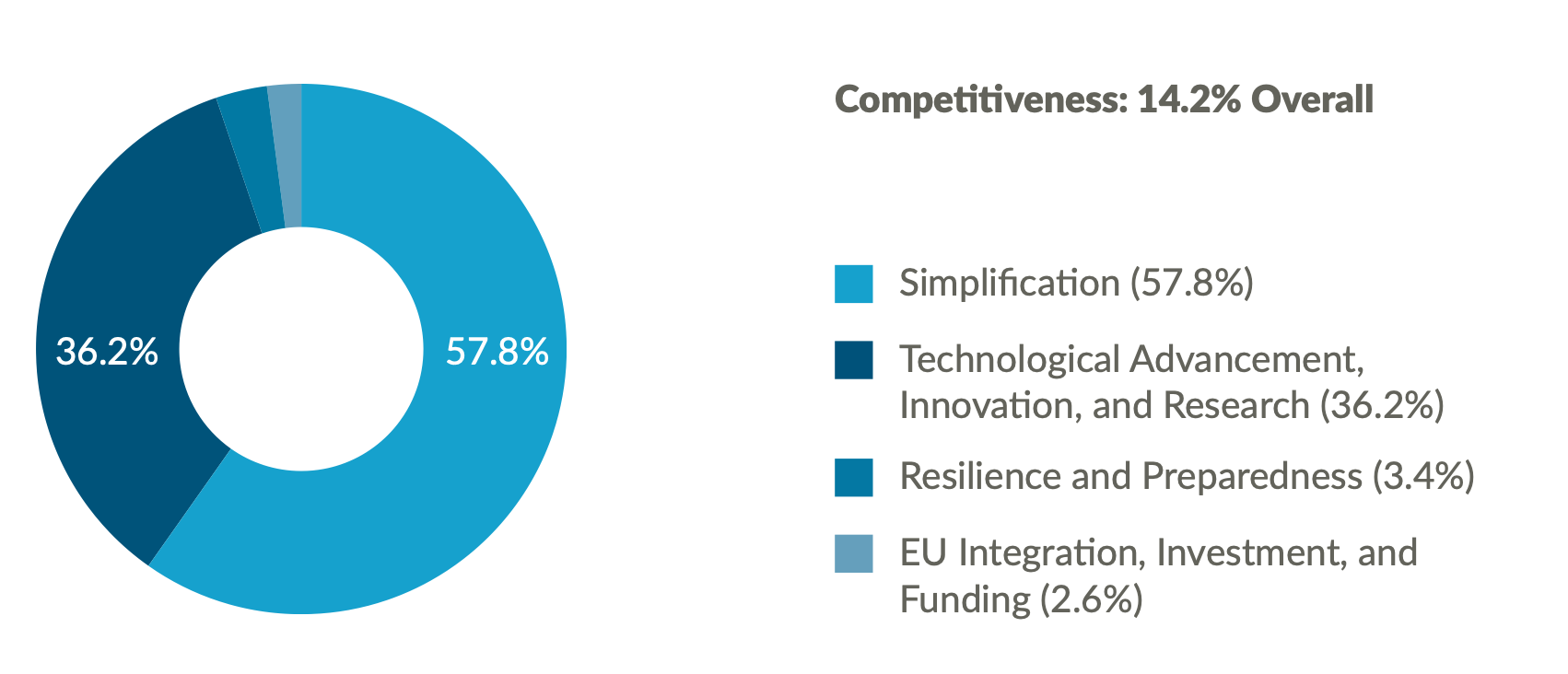
The consultation received 484 submissions from individuals, civil society groups, businesses, academics, and representative bodies. As shown in Annex I of the consultation summary, the Irish public prioritized competitiveness (14.15%), values (12.32%), and health (11.46%).
Regarding competitiveness, 57.8% identified simplification as their highest priority, while 36,2% identified technological advancement, innovation, and research.
The positives
The open and inclusive format of the public consultation not only allowed Irish policymakers to gauge local sentiment and steer their positions accordingly, but it also raised public awareness and, possibly, stimulated interest in EU affairs - something that normally very few people are interested in.
The simplicity of the consultation's design is another element worth highlighting. The submission process, the duration of the consultation, and the format of the questions were simple and uncomplicated, which allowed all segments of society - not just those already deeply involved in EU or public affairs - to participate freely.
Finally, the publication of an open, comprehensive 30-page summary with detailed explanations on participants and their sentiments is a transparent practice that both individual EU Member States and the EU institutions themselves could learn from.


