
Digital services taxes begin driving up consumer prices for ads
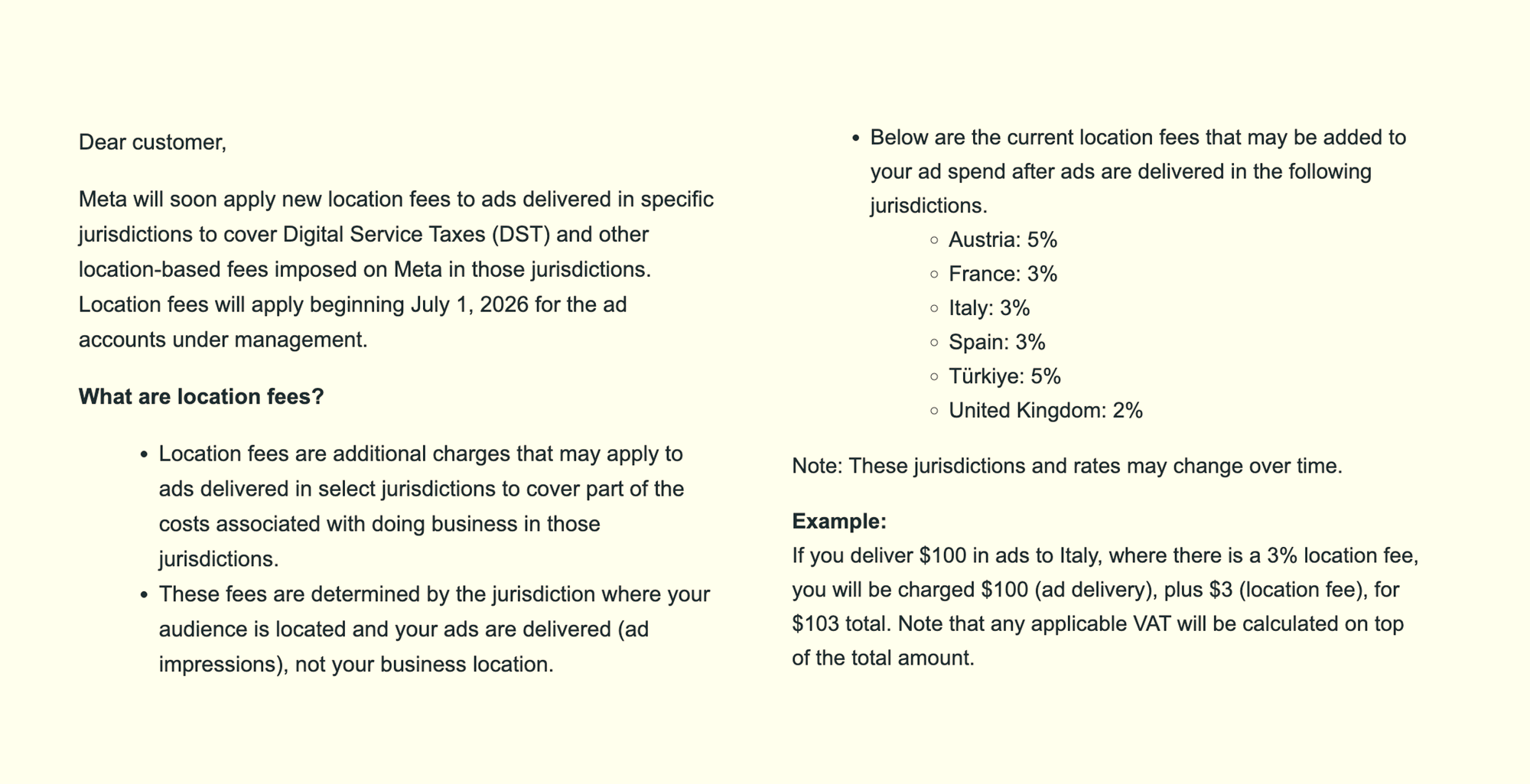
Although Brussels often overlooks how new taxes and regulations are passed on to consumers, the impact is already becoming clear: Meta advertisers have been told that “location fees” of 2% to 5% will apply in several European countries, with rates subject to change.


Users of Meta’s advertising services have reportedly started receiving notifications about additional local fees being added to their ad costs to cover digital services taxes (DSTs) in countries that have introduced some form of digital services taxation.
Although the argument that the costs of new taxes and regulations are normally passed on to consumers is sometimes overlooked in Brussels, the impact appears to be very tangible this time. One of our readers shared a message stating that these so-called location fees will apply in Austria and Turkey at 5%, in France, Italy, and Spain at 3%, and in the UK at 2%. The letter also mentions that jurisdictions and rates of these location fees may change over time.
The EU has previously attempted to introduce an EU-wide digital services tax. However, as no agreement was reached at the EU level, some individual Member States have moved forward on their own. Currently, an EU-wide DST proposal is still listed as pending on the European Commission's 2026 agenda.

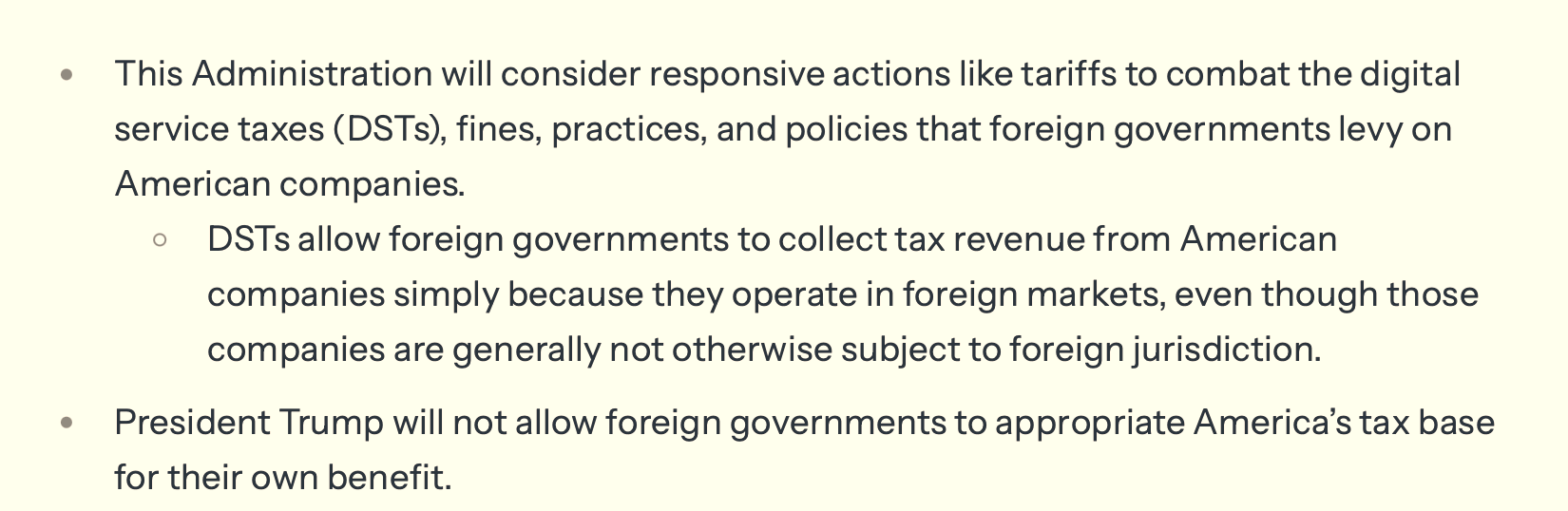
Shortly after his inauguration, US President Donald Trump has warned that the United States would retaliate against countries that introduce digital services taxes. While the EU-US trade agreement from last year states that the EU will not introduce network fees or “impose customs duties on electronic transmissions”, the EU has not removed the idea from its agenda altogether, and an increasing number of countries are considering introducing their own network fees.
Further costs may arise from upcoming legislative action
Aside from the extra costs imposed on consumers as a result of local digital services taxes, and Meta and Google discontinuing political advertising in the EU in response to the EU’s Regulation on the Transparency and Targeting of Political Advertising (TTPA) last summer, the upcoming Digital Fairness Act (projected to be drafted by the end of 2026) is also important.
Advertising platforms claim that personalising ads helps businesses reduce advertising costs by showing them to the right audience. If the use of personal data for advertising purposes is limited through the Digital Fairness Act, European companies would have to spend more on advertisements to reach their potential customers, and consumers would see more irrelevant ads as a result.